
Every day, we consume an extraordinary amount of information.
Books.
Articles.
Podcasts.
Videos.
News.
Courses.
Conversations.
Artificial intelligence.
Never before has so much knowledge been available to so many people.
Yet despite this abundance, many of us struggle to remember what we’ve learned, connect ideas across different subjects, or apply knowledge consistently in our lives.
Interesting thoughts disappear.
Great ideas are forgotten.
Valuable insights remain disconnected.
The problem isn’t a lack of information.
The problem is that most people don’t have a system for thinking.
In an age of unlimited knowledge, your greatest advantage isn’t learning more.
It’s learning how to organise what you already know.
What Is a Personal Thinking System?
A personal thinking system is a structured way of capturing, organising, connecting, and developing ideas over time.
Rather than relying on memory alone, it creates an external framework that allows knowledge to grow.
Think of it as an extension of your mind.
Instead of constantly asking:
“Can I remember this?”
You begin asking:
“How does this connect to what I already know?”
The goal isn’t to collect information.
It’s to build understanding.
Why Memory Was Never Designed for This
Human memory is remarkable.
But it evolved for survival, not for managing thousands of books, articles, conversations, and ideas.
Memory works best through relationships.
It remembers stories better than facts.
Connections better than lists.
Patterns better than isolated information.
When information remains disconnected, it becomes difficult to retrieve.
That’s why you often remember reading something important but can’t remember where you found it.
A personal thinking system solves this problem by creating connections that your brain can easily revisit.
Stop Collecting Information
Many people believe that becoming knowledgeable simply means consuming more content.
More books.
More podcasts.
More YouTube videos.
More AI conversations.
But information without organisation quickly becomes mental clutter.
Imagine collecting thousands of books and throwing them randomly into a warehouse.
You own the knowledge.
But you can’t use it.
Many people treat their minds the same way.
Learning becomes far more valuable when information is organised into meaningful relationships.
Knowledge Should Behave Like a Garden
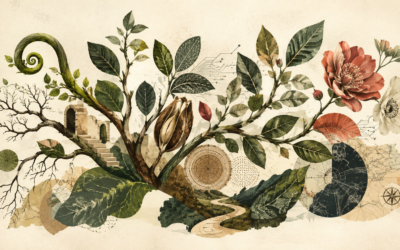
A useful way to think about knowledge is as a garden rather than a warehouse.
A warehouse stores information.
A garden grows it.
Ideas influence one another.
Concepts evolve.
Questions generate new insights.
The more connections you build, the more valuable every new piece of knowledge becomes.
Learning becomes exponential rather than linear.
This is how wisdom develops.
AI Changes Knowledge Management
Artificial intelligence is transforming the way we interact with information.
Instead of searching through hundreds of notes, you can ask AI:
“What themes have I been exploring recently?”
“How does this relate to something I learned last month?”
“What ideas connect these different subjects?”
“What assumptions appear repeatedly in my thinking?”
Instead of acting as another search engine, AI becomes a thinking partner.
It helps organise knowledge.
Reveal patterns.
Identify blind spots.
Generate new connections.
Most importantly, it encourages deeper thinking rather than simply faster searching.
Capture Less, Connect More
One of the biggest mistakes people make is trying to save everything.
Every quote.
Every article.
Every interesting fact.
Eventually the collection becomes overwhelming.
Instead, focus on capturing ideas that genuinely change your thinking.
Ask yourself:
- Why is this important?
- What problem does it solve?
- What does it connect to?
- How might this change my behaviour?
- Where could I apply it?
The quality of your thinking system depends less on how much you collect and more on how thoughtfully you organise it.
Build Around Questions, Not Categories
Traditional note-taking often relies on folders.
Psychology.
Business.
Health.
Philosophy.
Technology.
Real thinking doesn’t work that way.
The most valuable ideas often exist between disciplines.
Instead of organising information only by subject, organise it around questions.
For example:
- How do people make better decisions?
- What creates lasting happiness?
- Why do habits succeed or fail?
- How does artificial intelligence change human thinking?
- What makes great leaders different?
Questions naturally connect ideas from multiple fields.
They encourage exploration instead of storage.
AI as Your Librarian, Not Your Brain
A common misconception is that AI will eventually replace thinking.
A far better approach is to let AI organise your thinking while you remain responsible for understanding.
Imagine having an exceptionally intelligent librarian.
They can instantly retrieve information.
Recommend useful books.
Identify connections.
Summarise complex topics.
But they cannot decide what matters to your life.
That remains your responsibility.
AI should extend your thinking, not replace it.
The better your questions, the more valuable AI becomes.
Create a Living System
A personal thinking system is never finished.
Ideas evolve.
Beliefs change.
Knowledge expands.
Your notes should evolve with you.
Return to old ideas.
Challenge previous conclusions.
Add new perspectives.
Connect recent experiences with older insights.
A living thinking system becomes more valuable every year because every new idea strengthens the entire network.
Knowledge compounds in exactly the same way investments compound.
Small insights accumulate into deep understanding.
Practical Steps to Build Your Thinking System
You don’t need complicated software to begin.
Start with a simple process.
Capture
Write down ideas worth remembering.
Not everything.
Only what genuinely changes your thinking.
Connect
Ask:
“What does this remind me of?”
“What other ideas relate to this?”
Build links between concepts.
Reflect
Spend time reviewing your notes.
Understanding grows through reflection, not collection.
Question
Regularly ask AI:
- What patterns do you notice?
- What assumptions am I making?
- What themes keep appearing?
- Which ideas seem connected?
These conversations often reveal insights you would never have found alone.
Apply
Knowledge only becomes valuable when it changes behaviour.
Every important note should eventually answer one question:
“How will this influence the way I think or act?”
Why This Matters More Than Ever
Artificial intelligence is making information almost limitless.
Soon everyone will have access to the same facts.
The competitive advantage will no longer be information.
It will be understanding.
The people who thrive will be those who can organise ideas, connect knowledge across disciplines, think critically, and make wise decisions.
AI makes gathering information easier.
Your thinking system makes that information meaningful.
Final Thoughts
Building a personal thinking system isn’t about becoming more organised.
It’s about becoming a better thinker.
Artificial intelligence offers extraordinary tools for capturing, exploring, and connecting ideas.
But technology alone doesn’t create wisdom.
Wisdom emerges when information is organised, questioned, reflected upon, and applied.
The future won’t belong to those who consume the most information.
It will belong to those who build the best systems for thinking.
Because in an age of unlimited knowledge…
Clear thinking becomes your greatest competitive advantage.
Continue Reading
If you enjoyed this article, you may also like:
- AI and Productivity: Beyond Automation
- Deep Work in the Age of AI
- Why Focus Is Becoming a Superpower
- Attention: Your Most Valuable Resource
- AI as a Thinking Partner
- Thinking Clearly in the Age of Information Overload
Together, these articles explore how to use artificial intelligence not simply to work faster, but to think more clearly, make better decisions, and develop lasting wisdom.